Block Games
See how blocks define a space
A block can be a puzzle piece, a step to land on or part of the landscape. The Block tag on Pokiy brings those uses together. To decide what to open, look at the empty space around the blocks. If it looks like somewhere you would place a piece, you may want a board game. If it looks like somewhere you could fall, try a platform game. The shape is familiar in either case, but the kind of judgment it asks for changes with the way the scene is laid out.
Learn what counts as a comfortable landing
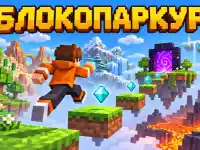
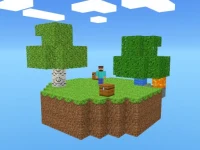
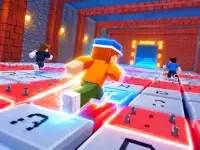
BlokoParkur is listed under this tag. Try using the edges of its block platforms as reference points. When you approach a gap, decide where you want to be at the end of the jump. A platform that looks large from far away can leave very little room if you arrive near the wrong edge. The first successful crossing is a chance to find out how far the character moves before coming to a stop. Watch where you end up in relation to the following gap before trying to jump again.
If a jump keeps surprising you, compare it with a smaller one. Notice when the character leaves the surface and how much time you have to adjust before landing. A skill you learn between two easy blocks can be useful farther along the route. If the pieces are offset, try following one edge with your eyes before you think about the distance between them. Looking at the gap from the direction you intend to move can reveal a different problem from the one you saw while standing still.
Ask what a move leaves available on the board
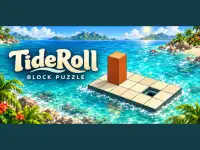
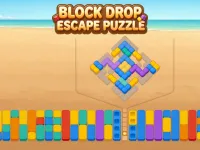
TideRoll Block Puzzle also appears in this collection. In a block puzzle, the space you leave behind is often as interesting as the space you fill. Compare an option that puts a piece against the edge with one that divides the open area near the center. Either move might work immediately. The difference is what shapes you can fit afterward. Before settling on a position, ask whether the remaining space has a clear use, or whether you are creating little pockets that will be difficult to reach.
When trying two approaches, give yourself a small target. See how long you can keep one side of the board easy to use, or pick a piece and find two possible homes for it before choosing. That exercise can help you see an arrangement you would miss if you accepted the first fit each time. Afterwards, consider which decision actually made the rest of the board easier to read.
Choose another way to use an edge
Go to Arcade Games if your favorite part was judging a landing. Explore Puzzle Games when you would rather study how one choice changes a board. Start the next game by looking at the boundaries of the space you need, then decide whether you want to fit something into it or use it to get somewhere else.