Puzzle Games
Use the rules to change what happens next
A puzzle can give you all its pieces before you know what to do with them. On Pokiy’s Puzzle tag, you might find a scene where one object reacts to another, or a route where a piece needs to arrive in a particular position. To get started, pick a move that will tell you something. A small test can show how far a piece travels, which object reacts or what becomes available when a switch changes. Once you can explain that result, you have a clue you can use elsewhere in the level.
Make a decoy in Splash Guard
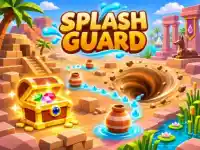
Splash Guard describes sinkholes that head toward the nearest splash while you try to protect treasure chests. Before placing water, look at where the nearest sinkhole would have to go to reach it. Then look for the other objects whose routes might change. A splash that draws one sinkhole away could affect another from a different direction. Try investigating that relationship on a part of the level you can see clearly, where the outcome of one splash will be easy to follow.
When the scene gets busy, think in terms of the area you want to keep clear. You can choose a decoy because it creates distance from that area, or because it sends a problem away from a route that was about to become crowded. The closest available spot is only one possibility. Before committing, imagine where the sinkhole might be afterward. It may be easier to choose a place for your next splash if the first one leaves several useful directions open.
Think beyond the next square in Astro Block
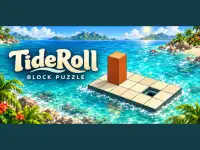
Astro Block takes the action to floating platforms. The game description mentions rolling a block, activating switches, opening bridges and reaching a portal. When a crossing depends on a switch, check whether you can approach it from a place that also leaves you ready to cross afterward. Think about the orientation of the block, as well as the square you want it to reach. Two paths can take you to roughly the same place and leave the block positioned quite differently for the next move, especially near a narrow bridge.
If you reach a dead end, work backward from the position you would need. Find the last move that could have put the block there and see whether the platform gives it enough room. Even if you only work back one or two steps, you may discover why a route that looked promising was hard to finish. Use that observation on another attempt instead of repeating the whole path and hoping for a different result.
Look for another kind of consequence
Try Physics if you liked observing what happens after an input. Open Logical for boards where finding a constraint can help you rule out options before moving anything. Pick a game where the results make you curious, and see whether its first few moves give you a question you want to answer.