Brain Games
Choose a puzzle that rewards the way you notice things
The Brain tag on Pokiy includes games that ask you to look at a board, test an idea and use the result to make a better decision. The kind of thinking changes from title to title. Some games reward finding a route between pieces. Others give you a completed image and ask you to reconstruct it. Read the opening instructions with a particular question in mind: what information is available before the move, and what will the move let you see afterward? That distinction can help you decide which challenges you would enjoy spending time on.
Look at the route between matching tiles
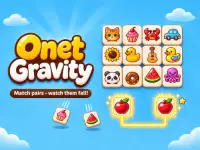
In Onet Gravity, the game page explains that matching tiles can be connected by a path of up to three straight segments. Two identical pieces are a possible pair, but the space between them matters. Begin with a match whose route is easy to follow. Look at the direction the path needs to turn and whether an occupied space interrupts it. When a pair cannot connect, consider whether making a different match first could open a route. You can use the failed attempt as information about the board.
The gravity element gives you a reason to observe more than the two tiles you remove. After making a connection, watch where nearby tiles go. Is the next match still in the place you remembered, or does the new arrangement offer something you could not reach before? On a replay, pick a part of the board to keep in view while you make the first move. Seeing the change directly can help you understand why a second connection became possible.
Use a finished image as a reference
Pattern Mover brings a pixel picture into the same tag. Its description introduces colored tiles and a finished image you can examine. Look for a corner, stripe or other recognizable shape before selecting any piece. Then identify the smaller choices that make the shape readable. A row of similar colors may be easier to place once you can relate it to the edge of the picture. Try to use the image to check one decision at a time, especially when several tiles look almost identical.
In a game with a picture to reconstruct, the order in which you look at things can save effort. Broad color areas give you an orientation, while small details can confirm the exact position. When you feel uncertain about a tile, compare it with its neighbors in the reference. If the picture seems to give you two good answers, see whether one agrees with a line that continues into another part of the image.
Pick another kind of thinking
Browse Puzzle Games for boards with different rules, or visit Coloring to make choices about a picture with more freedom. Carry a useful habit with you, such as spotting the edge of an area before judging what belongs inside it. In the new game, see whether that habit still helps.