Levels Games
Use each stage to learn something new
The Levels tag on Pokiy gives you a place to look for games with a sequence of stages. The useful question is what changes when you move from one stage to the next. Some games keep a familiar movement and change the route around it. Others add new objects or make you rethink which move should come first. A clear stage boundary gives you a natural stopping point. It also gives you a chance to look back at the one thing you learned before the game asks you to use it again.
Try a platforming stage
Hop Hero: A Lollipop Adventure is listed in this collection. If you choose a game about moving through a level, pay attention to the first place where you have to stop or change pace. It may be more useful to learn that little section well than to rush past it once. Next time you see a similar arrangement, decide whether the same movement works or whether the distance to the landing has changed. This is one way to make the structure of the level part of what you are playing with.
At the start of a new stage, take enough time to understand what the screen is asking. A familiar object can occupy an unfamiliar position, and a movement that was safe in one place may leave too little room in another. When you spot a difference, describe it to yourself before moving. You might notice that there is less space after a jump, or that the next object is further away than it first appears. Naming the difference makes it easier to pick a concrete adjustment.
Try another kind of progression
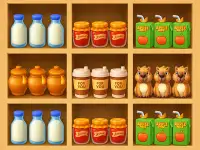
Fruit Shelf Sort is also listed under Levels. In a sorting game, the stage can give you a different arrangement rather than a new stretch of ground. Look at what is already grouped before choosing what to move. If two moves seem possible, consider which one would make the next choice clearer. On another stage, try using the same habit and see whether the new arrangement rewards it. That lets you compare puzzles by what they ask you to think about, even when the objects look similar.
Save a useful observation between stages
A sequence of levels is easier to enjoy when you can remember why the last one worked. Keep a small detail in mind, such as the place you needed to stand before jumping or the piece you needed to leave accessible. When a later stage feels harder, test whether that detail still matters. If it does, you have a starting point. If it does not, the change itself tells you where to look next.
Open Arcade Games if you want to practice movement through a sequence of spaces. Try Puzzles when you would rather deal with a new arrangement after each success. In either case, a stage that teaches you one thing can make a rewarding break by itself even during a busy afternoon.