Physics Games
Watch what happens after you let go
Physics games on Pokiy make movement interesting by letting it continue after an input. A bike can settle differently depending on how you enter a corner. A rolling ball can become larger as it collects objects. Each game chooses which effects to emphasize, so give yourself an easy place to observe what it does. The opening is a chance to learn how long a movement lasts and which details show you that something is about to change.
Keep traction in view on a mountain bike
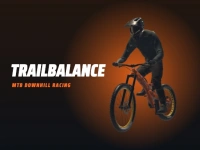
TrailBalance describes 3D mountain bike races built around balance, braking and traction. The page mentions a field of twenty riders and thirty-five technical courses. Try choosing a short stretch to study before paying attention to where you finish. On a section with roots or an uneven surface, watch how the bike responds to the ground before making another correction. If you do too much at once, it can be hard to tell whether a wobble came from the surface, the brakes or your own steering.
Make a mental note of where a tricky section begins. On another attempt, you could approach from the same line but ease off earlier. Compare the way the bike behaves as it reaches the uneven patch. If the first change gives you time to see the next part of the trail, you have learned something practical even if your overall position in the race does not improve. This is one way to get comfortable with a game in which the terrain has a say in how the vehicle moves.
Pick routes that change as you grow
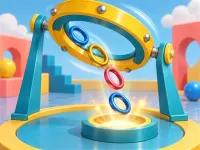
Panic Roll is listed here too. Its description starts with a tiny ball that rolls over smaller objects, collects them and grows. In an opening run, look at how the size of the ball compares with things nearby. Where you can go and what you want to collect may look different after a few pickups. Choose a short route with a visible goal, then revisit the same area once the ball has changed. It can feel like a different place because the relationship between you and the objects is different.
When several pieces are available, make a choice you can explain afterward. You could choose the route with a string of objects close together, or head to an area with room to turn. Watch what happens when the size of the ball changes halfway through. If the route you planned no longer makes sense, a recognizable object at the edge of the scene can give you a reference for adjusting it. That keeps the decision focused on what the new shape can do.
Find another movement to study
Explore Driving if you liked using the surface to plan a vehicle’s next move. Go to Hypercasual Games for shorter experiments with a single action. Start the next round by making a prediction about one interaction. Once you see the result, adjust your prediction and test it against the next move.