Running Games
Read the course while the character is still moving
Pokiy’s Running tag includes games that give you another job to do while you travel. You might remove bolts in front of a closed gate or change the size of a character trying to get across a bridge. Both games ask you to pay attention to the space ahead, but each has its own visual clues. Choose according to what you would like to read as you go. A puzzle can make you look at the order of several objects. A one-button runner can make the length of a single press more important than the number of choices you have.
Read the arrows before you reach the gate
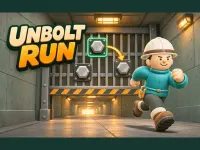
Unbolt Run combines a 3D running course with bolt puzzles. Its game page explains that you follow arrows and remove bolts in the correct order to lift steel gates. Try watching the gate while it is still at a distance. Look for the first arrow you can distinguish and the part of the gate it points to. Even before you know the sequence, seeing where it starts can help you direct your attention once you arrive. The running stretch becomes part of the puzzle because it gives you a little time to prepare.
If you lose your place, think about which piece of information disappeared from your attention first. Maybe you could see the arrows but forgot which bolt you had already removed. On another attempt, watch the gap left by each removed piece. It gives you a clue about where you have been while the remaining bolts show you what is still available. You can also try to recognize a familiar arrangement on a later gate and see whether its arrows point you toward the same opening move.
Change size to suit the next stretch of bridge
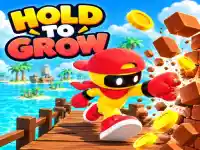
Hold to Grow gives you a single button on a wooden bridge over the sea. The description says that holding it makes the runner larger and releasing it makes the runner shrink. In a quiet opening stretch, watch how the figure changes while your finger stays down. Then see what happens after the release. When you know how the two movements look, try reading a difficult part of the bridge early enough to decide which size you want by the time you reach it.
Use the planks as a way to make sense of a repeat attempt. A visible object beside the bridge or a change in the surface can mark the place where you began holding. Compare that with a run where you wait until you are closer. If the new approach feels easier, see whether you gave yourself more time to read the gap or simply arrived in a better shape.
Find another reason to keep moving
Browse Run for obstacle courses with different timing cues. Explore Logic when deciding the order of a task was more interesting than getting there quickly. You can carry either preference back into the Running collection and use it to choose a different kind of course.